
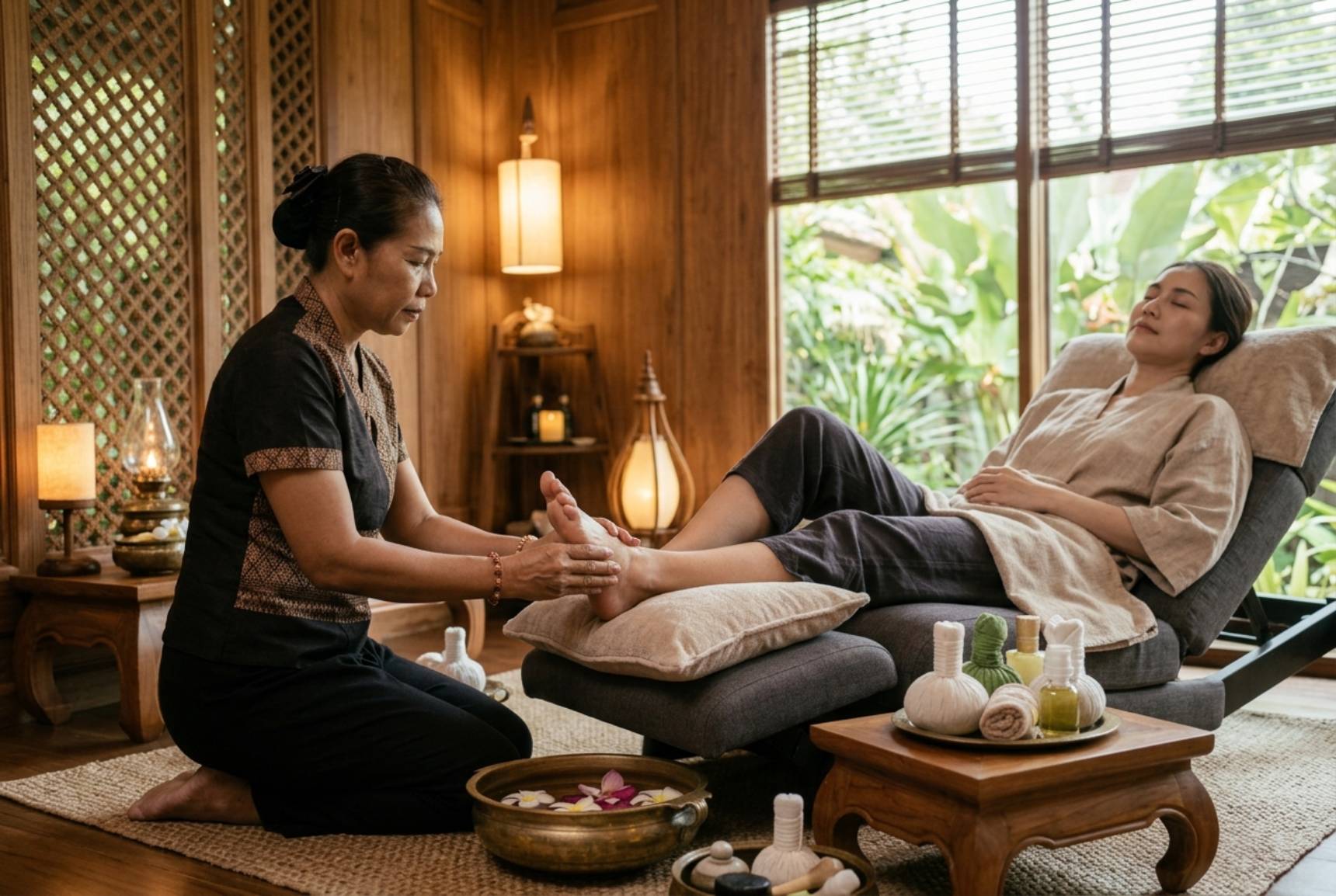
Thai foot massage is more than a relaxing treatment after a long day of walking through Bangkok. It reflects a much broader philosophy of Thai wellness—one that views the body as an interconnected system and uses therapeutic touch, pressure, and rhythmic techniques to promote balance and relaxation.
From traditional Thai medicine to modern spas, foot massage has remained one of the most accessible and enduring forms of Thai bodywork. Its simplicity is part of its appeal: you can experience a meaningful wellness ritual without committing to a full-body treatment.
The Traditional Roots of Thai Foot Massage
Thai massage, known as Nuad Thai, has developed over centuries as part of Thailand’s traditional healing culture. Historical evidence and preserved teachings connect Thai massage with traditional medicine, Buddhist communities, and knowledge passed down through generations.
One of the most important centers for preserving this knowledge is Wat Pho in Bangkok. The temple became an important center for the preservation and teaching of Thai traditional medicine, with inscriptions depicting therapeutic points and energy pathways known as sen.
Thai massage was officially recognized by UNESCO as an Intangible Cultural Heritage of Humanity in 2019, reflecting its importance as both a traditional healing practice and an element of Thai cultural heritage.
Foot massage belongs naturally within this wider tradition. Rather than treating the feet as an isolated part of the body, traditional Thai approaches consider touch and pressure as part of a broader relationship between different areas of the body.
Why the Feet Matter So Much in Wellness
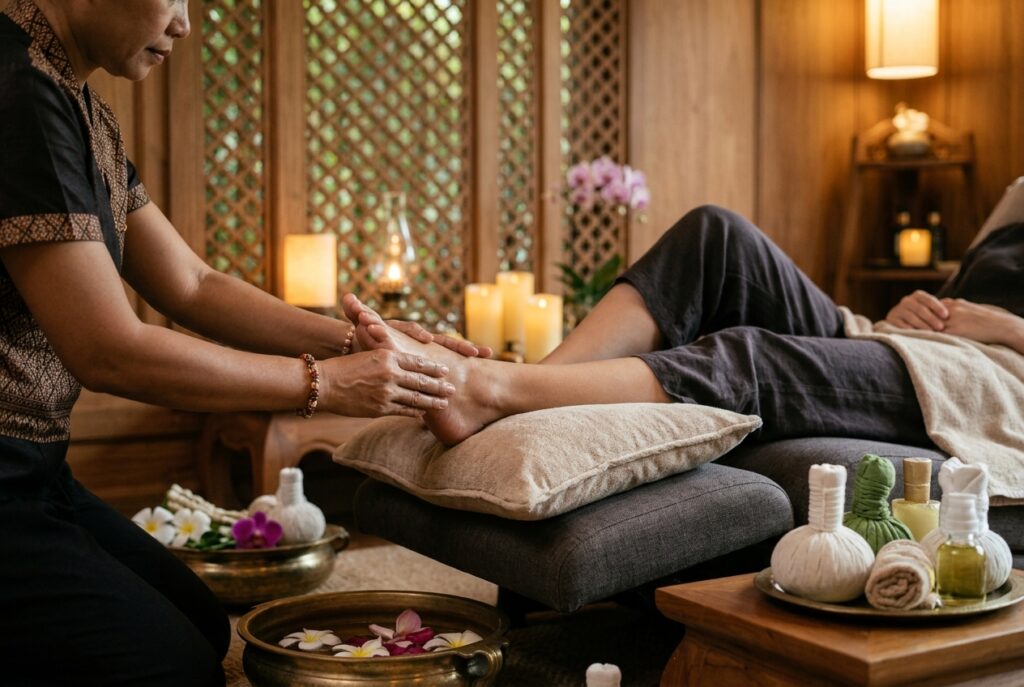
Our feet carry us through almost everything we do.
Walking, standing, commuting, exercising, shopping, working, and traveling all place repeated demands on the feet and lower legs. In a city such as Bangkok, where exploring the city can mean spending hours on your feet, a foot massage can become an especially welcome form of relaxation.
Thai foot massage typically combines rhythmic pressure, massage movements, stretching, and attention to different areas of the feet and lower legs. Depending on the spa and treatment style, therapists may also incorporate traditional massage tools.
The goal is not simply to make the feet feel relaxed. The experience can encourage a sense of relaxation throughout the body while giving tired feet focused attention.
The Connection Between Feet and Relaxation
One reason foot massage has remained popular for generations is its ability to create a strong feeling of relaxation without requiring a full-body treatment.
The feet contain many sensitive areas, and focused massage can provide a combination of pressure and soothing movement. As the treatment progresses, many guests find it easier to slow down, sit quietly, and disconnect from the demands of the day.
This is particularly valuable in modern urban life.
Wellness is not always about spending hours at a spa. Sometimes, a 30- or 60-minute treatment focused on the feet can provide a simple opportunity to pause, breathe, and reset.
Thai Foot Massage and the Sen Lines
Traditional Thai massage incorporates the concept of sen, or energy pathways within the body. These pathways are an important part of traditional Thai massage theory and are represented in historical material preserved at Wat Pho.
Modern foot massage should not necessarily be understood as a medical procedure based on these traditional concepts. Instead, the sen framework helps explain the philosophy behind Thai bodywork: the body is viewed as interconnected, and massage works through purposeful pressure, movement, and touch rather than simply focusing on one isolated muscle.
This holistic perspective is one reason Thai foot massage continues to feel different from a conventional foot rub.
More Than Relaxation After a Long Day
For many people, the most immediate benefit of foot massage is simply feeling more comfortable and relaxed.
A focused foot treatment can be particularly appealing after:
- A long day of sightseeing
- Extended periods of standing
- Shopping and walking around Bangkok
- Travel and long journeys
- Exercise or everyday physical activity
- A busy working day
- Time spent wearing uncomfortable footwear
Thai massage traditions are associated with techniques involving pressure, compression, and rubbing, which are traditionally used to ease muscular tension and support a feeling of physical wellbeing.
The experience can therefore be both practical and restorative—giving tired feet dedicated attention while creating a moment of calm.
Why Foot Massage Became a Bangkok Wellness Essential
Bangkok has become one of Asia’s best-known wellness destinations, but the popularity of Thai foot massage is not simply a modern tourism trend.
Foot massage fits naturally into the rhythm of Bangkok life.
It can be enjoyed as a short treatment between activities, after visiting temples and cultural attractions, following a shopping trip, or as a relaxing way to end the day.
Even traditional massage centers associated with Wat Pho offer foot massage alongside Thai massage, demonstrating how the treatment continues to form part of Thailand’s broader massage tradition.
Today, foot massage can be found throughout Bangkok in traditional massage schools, neighborhood massage shops, hotels, and luxury spas.
What Makes Thai Foot Massage Different?
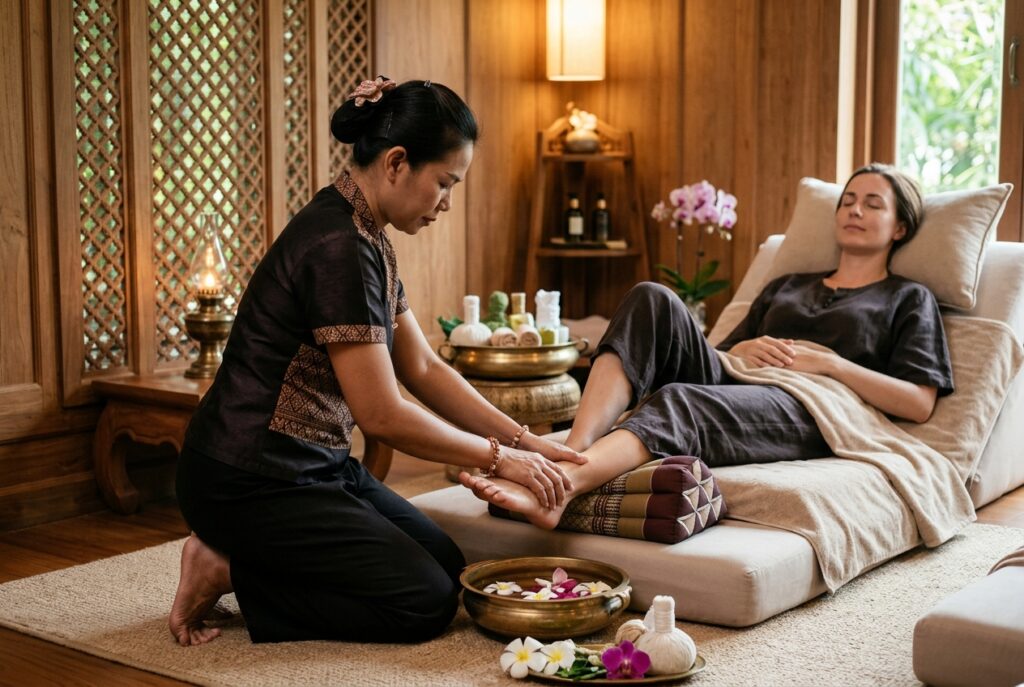
A traditional Thai foot massage is generally more structured than a simple relaxation-focused foot rub.
The therapist may work progressively through the feet and lower legs using different pressures and rhythmic techniques. Depending on the treatment, stretching and massage may be incorporated to create a more comprehensive experience.
The treatment is also influenced by the wider principles of Thai massage, where rhythm, pressure, positioning, and therapist technique work together.
This combination gives Thai foot massage its distinctive character: it can be calming and deeply relaxing while still feeling purposeful.
A Wellness Ritual for Modern Life
One of the reasons Thai foot massage has survived and evolved for so long is its adaptability.
The traditional philosophy remains recognizable, but today’s spas can present the experience in many different ways. A treatment might be part of a larger spa journey or a standalone session designed for guests who want something shorter.
This makes foot massage particularly relevant to modern wellness.
Not every wellness ritual needs to be complicated. Taking time to care for the feet can be a simple reminder to slow down and reconnect with the body.
Choosing a Thai Foot Massage in Bangkok
When choosing a foot massage, consider the overall experience rather than simply selecting the shortest or cheapest treatment.
A professional spa should provide:
- A clean and comfortable treatment environment
- Trained and attentive therapists
- Clear information about treatment duration
- An opportunity to communicate your preferred pressure
- Comfortable seating or treatment areas
- A relaxing atmosphere
- A treatment adapted to your comfort level
If you are new to Thai foot massage, let your therapist know. They can adjust the pressure and technique according to your preferences.
And if you experience persistent foot pain, swelling, numbness, or another unexplained symptom, massage should not replace appropriate medical advice.
The Timeless Appeal of Thai Foot Massage
Thai foot massage has remained an important part of wellness because it combines simplicity with tradition.
It does not require elaborate equipment or an extensive treatment ritual. Instead, it relies on skilled hands, thoughtful pressure, rhythmic movements, and a philosophy that considers the body as a connected whole.
From the traditional teachings preserved at Wat Pho to the contemporary spas of Bangkok, Thai massage continues to evolve while maintaining its cultural identity.
For visitors exploring Bangkok, a Thai foot massage can be much more than a break from sightseeing. It is an opportunity to experience one of Thailand’s enduring wellness traditions in a form that remains accessible, practical, and deeply relaxing.
Sometimes, the foundation of wellness begins exactly where every journey does: at your feet.