
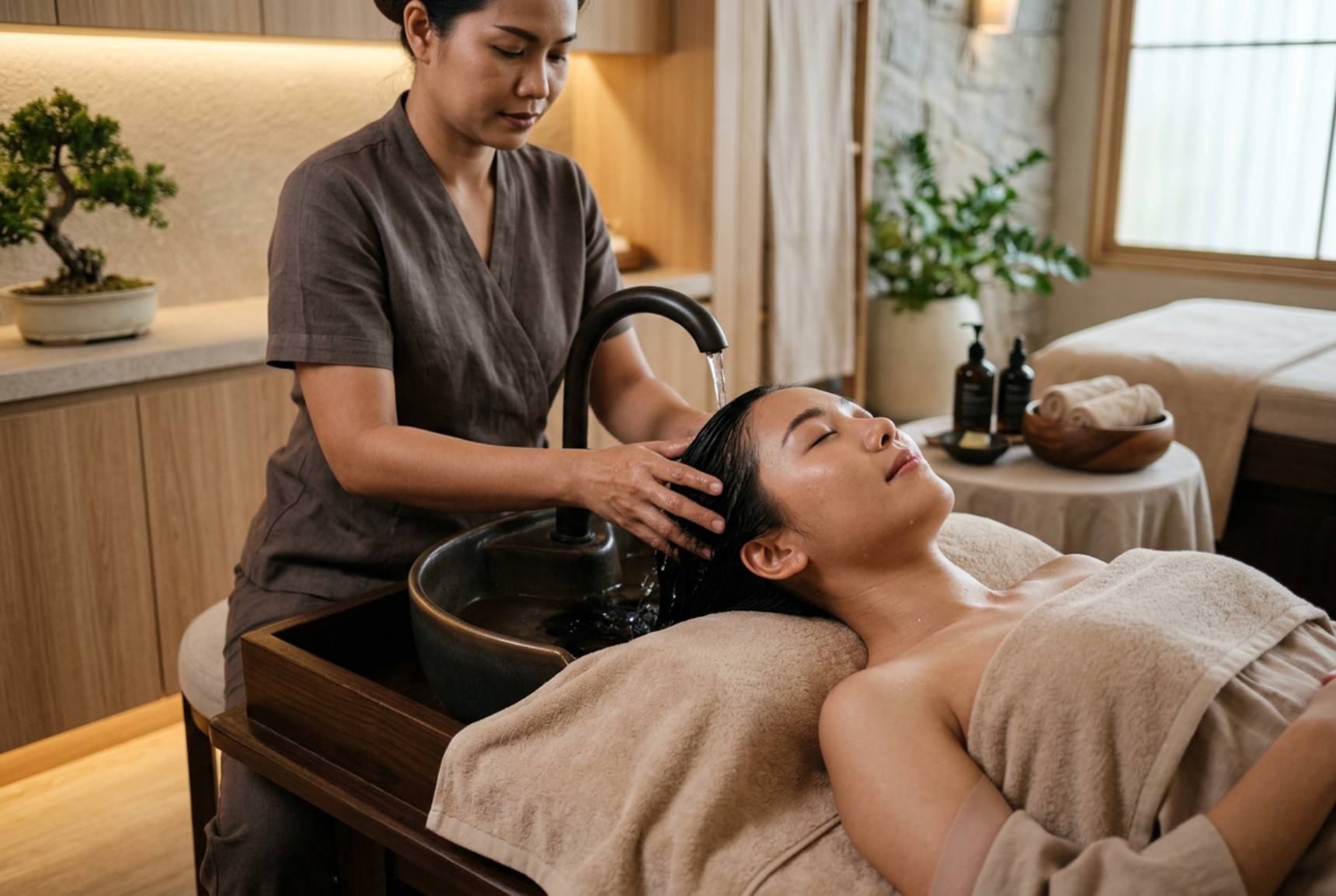
In the world of modern wellness, some of the most enjoyable treatments are also the simplest. A head spa combines professional scalp care, massage, cleansing and relaxation to create an experience that goes far beyond an ordinary hair wash. Inspired by Japanese wellness traditions, head spa treatments have become increasingly popular among people looking for a calming escape from busy daily routines.
But what makes a head spa different from a regular scalp massage or salon shampoo? The answer lies in the complete experience. Rather than focusing only on the hair, a head spa gives attention to the scalp, head, neck and shoulders while creating a peaceful environment designed to encourage deep relaxation.
For anyone spending long hours at a computer, navigating Bangkok’s busy streets or simply looking for a new way to unwind, a head spa can be a refreshing addition to a wellness routine.
What Is a Head Spa?
A head spa is a specialized wellness and beauty treatment that typically combines several elements of scalp and relaxation care. Depending on the spa, a session may include scalp analysis, deep cleansing, gentle exfoliation, scalp massage, warm water treatments, steam, conditioning treatments, aromatherapy and massage around the head, neck and shoulders.
The treatment is designed to care for the scalp while also creating a relaxing sensory experience. Unlike a quick shampoo at a hair salon, a head spa gives considerably more time and attention to the scalp and surrounding areas.
Many modern head spas are inspired by Japanese-style treatments, where slow movements, warm water, massage and a tranquil atmosphere work together to create a feeling of relaxation and renewal. Modern versions can vary considerably from one spa to another, so it is worth checking exactly what is included in a treatment before booking.
Why Is a Head Spa More Than Just Scalp Care?
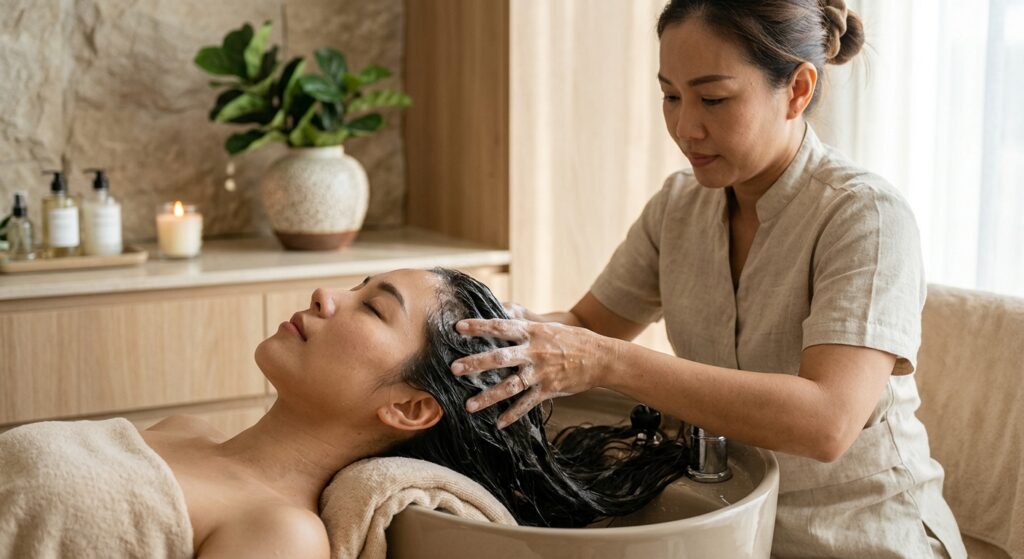
It can be easy to think of a head spa as simply a more luxurious way to wash your hair. In reality, the experience combines several forms of personal care into one treatment.
A Thorough Scalp-Cleansing Experience
The scalp can accumulate excess oil, dead skin cells, sweat and residue from styling products. A professional head spa treatment usually gives the scalp more attention than a standard hair-washing routine.
Deep cleansing can leave the scalp feeling fresh and comfortable while helping remove everyday buildup. Depending on the treatment, gentle exfoliation may also be used to refresh the surface of the scalp.
The result is not simply cleaner hair. It is the sensation of having your entire scalp properly refreshed.
Relaxation Through Scalp Massage
One of the biggest attractions of a head spa is the massage. The scalp, temples, forehead, neck and shoulders can all become tense, particularly for people who spend many hours working at a desk or looking at screens.
Slow, rhythmic massage can help release feelings of tension and create a strong sense of relaxation. Massage is also one of the reasons many people describe head spa treatments as a wellness experience rather than simply a beauty service.
For some guests, the combination of quiet surroundings, gentle touch and warm water is so relaxing that they naturally drift into a short nap during the treatment.
A Moment to Disconnect
Modern life rarely gives us much time to stop. Phones, messages, work and social media can make it difficult to enjoy genuine uninterrupted relaxation.
A head spa provides an opportunity to put the outside world aside for a while. With soft lighting, calming music, pleasant aromas and a comfortable treatment environment, the experience encourages you to slow down and focus on the present moment.
This mental break can be just as valuable as the physical aspects of the treatment.
Care for the Neck and Shoulders
A head spa does not necessarily stop at the scalp. Many treatments incorporate massage around the neck and shoulders, areas that commonly hold tension.
This is particularly appealing to people who work on computers, use mobile devices frequently or spend long periods sitting in one position. Combining scalp massage with attention to the neck and shoulders can make the treatment feel more complete and restorative.
Hydration and Conditioning for the Hair
Some head spa treatments also include hair masks, conditioning treatments or nourishing products. After the scalp has been thoroughly cleansed, these products can leave the hair feeling softer, smoother and more manageable.
The exact products and techniques vary between spas, so guests with specific hair concerns should ask their therapist which treatment is most suitable for their hair and scalp.
The Connection Between Scalp Care and Overall Well-Being
The scalp is skin, and like the rest of the skin on the body, it benefits from appropriate cleansing and care. However, the appeal of a head spa goes beyond maintaining a clean scalp.
The treatment combines grooming with touch, warmth, quiet surroundings and relaxation. This combination makes it possible to care for your scalp while also giving your mind a much-needed break.
That is one reason head spas have become part of the broader wellness conversation. They sit somewhere between beauty treatment and relaxation ritual, giving guests the opportunity to care for themselves from the shoulders up.
What Happens During a Typical Head Spa?
Every spa has its own approach, but a typical head spa experience may follow several stages.
Step 1: Scalp Assessment
Some spas begin by examining the scalp to understand its condition and identify areas that may require particular attention. This can help the therapist choose appropriate cleansing or conditioning products.
Step 2: Scalp Cleansing
The treatment may begin with a thorough cleansing process designed to remove excess oil and everyday buildup. The sensation of warm water combined with a gentle scalp massage is often one of the most enjoyable parts of the experience.
Step 3: Exfoliation
Depending on the treatment, gentle exfoliation may be used to remove dead skin cells and surface buildup. This step is not necessarily included in every head spa, particularly when the scalp is sensitive, so professional guidance is important.
Step 4: Scalp and Head Massage
The therapist then works across the scalp and may incorporate the temples, forehead, ears, neck and shoulders. Slow massage techniques are used to encourage relaxation and release everyday tension.
Step 5: Conditioning or Scalp Treatment
A nourishing mask, conditioner or specialized scalp product may be applied according to the treatment. Warmth or steam may also be incorporated into some head spa rituals.
Step 6: Final Rinse and Hair Care
The treatment usually finishes with a final rinse and hair-drying or styling service, depending on the spa. Guests often leave with hair that feels clean and refreshed as well as a noticeably calmer state of mind.
Who Can Enjoy a Head Spa?
One of the advantages of a head spa is that it can appeal to many different people.
- People looking for a relaxing wellness experience
- Office workers who experience everyday head, neck or shoulder tension
- Travelers wanting to recover after a busy day exploring Bangkok
- People interested in improving their scalp-care routine
- Anyone who enjoys massage and sensory wellness treatments
- People looking for a peaceful self-care experience
- Those who simply want to try something different from a traditional massage or facial
A head spa can be particularly enjoyable after a busy day in Bangkok. After walking, shopping, sightseeing or working, spending an hour in a quiet treatment room can provide a welcome change of pace.
Head Spa vs. Scalp Massage: What Is the Difference?
A scalp massage focuses primarily on massage and relaxation. A head spa generally combines massage with several additional elements of scalp and hair care.
Scalp Massage
- Primarily focuses on massage
- Usually shorter
- Focuses mainly on relaxation
- May focus primarily on the scalp
Head Spa
- Combines massage with scalp and hair care
- Often designed as a longer, complete ritual
- Can include cleansing, exfoliation and conditioning
- May include the scalp, head, face, neck and shoulders
Neither option is necessarily suitable for every person or every situation. A scalp massage can work well when you want a focused relaxation treatment, while a head spa provides a more comprehensive experience combining scalp care and wellness.
Why Head Spas Are Becoming Popular in Bangkok
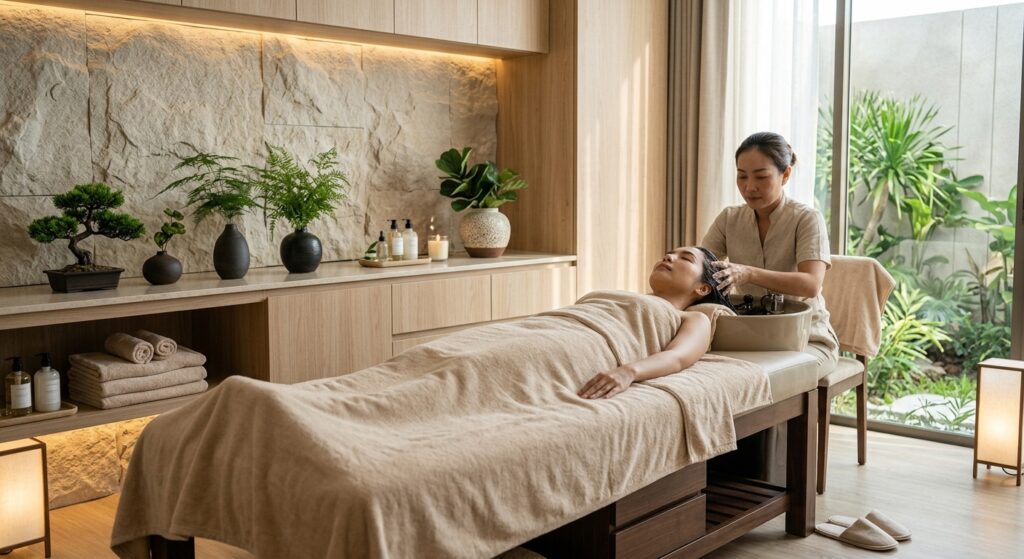
Bangkok has long been known for its diverse spa and wellness culture. From traditional Thai massage and aromatherapy to modern facial treatments, the city offers many ways to relax and recharge.
Head spas fit naturally into this environment because they combine beauty and wellness in a single experience. They also offer something different from a conventional full-body massage, making them appealing to visitors and local residents who want to explore new forms of self-care.
For travelers, a head spa can also be an easy treatment to fit into a Bangkok itinerary. It can provide a relaxing break between shopping, sightseeing, dining and other activities without requiring a full day dedicated to wellness.
The Sensory Side of a Head Spa
Part of the appeal of a head spa comes from the senses.
The warmth of the water, the sound of running water, the fragrance of carefully selected products and the sensation of a slow scalp massage can combine to create an immersive experience.
Rather than rushing through a series of beauty steps, a head spa encourages you to experience each stage slowly. This slower pace is one of the reasons the treatment can feel particularly restorative.
Can a Head Spa Improve Hair Growth?
Head spas are sometimes promoted with claims about stimulating hair growth or reversing hair loss. It is important to approach these claims carefully. A relaxing scalp treatment should not be considered a medical treatment for hair loss, alopecia or other scalp conditions.
Massage can temporarily increase local blood flow, and professional scalp cleansing can help remove buildup. However, persistent hair loss, significant thinning, inflammation or other scalp problems should be discussed with an appropriate medical professional.
The most realistic way to think about a head spa is as a combination of scalp care, grooming and relaxation rather than a medical solution for hair or scalp disorders.
How Often Should You Have a Head Spa?
There is no universal schedule that works for everyone. The ideal frequency depends on your scalp, hair type, lifestyle and the type of treatment you choose.
Some people enjoy a head spa occasionally as a special wellness experience, while others incorporate it into a regular self-care routine. If your scalp is sensitive or you have an existing scalp condition, it is best to discuss the appropriate treatment frequency with a qualified professional.
For many people, the greatest value is not in having treatments as frequently as possible but in finding a routine that complements their everyday hair and scalp care.
How to Make the Most of Your Head Spa Experience
If you are booking a head spa in Bangkok for the first time, a few simple preparations can make the experience even more enjoyable.
- Tell your therapist about your scalp: Mention sensitivity, dryness, oiliness or any products you regularly use.
- Arrive with enough time: Avoid rushing into your appointment so you can fully enjoy the relaxing atmosphere.
- Limit heavy styling products beforehand: This can make it easier for the therapist to assess and cleanse your scalp.
- Communicate during the massage: Let your therapist know if you prefer lighter or firmer pressure.
- Disconnect from your phone: One of the biggest benefits of a head spa is having time away from digital distractions.
- Choose a treatment suited to you: Ask about the products and techniques used, particularly if you have sensitive skin or a specific hair-care routine.
Head Spa: A Small Luxury With a Bigger Wellness Experience
A head spa may begin with the scalp, but its appeal goes much further. It combines cleansing, massage, hair care, warmth and relaxation to create a treatment that feels both practical and indulgent.
For some people, the biggest benefit is leaving with a fresher-feeling scalp and softer hair. For others, it is the chance to switch off, release tension and enjoy an uninterrupted period of calm.
In a fast-moving city like Bangkok, that opportunity to slow down can be particularly valuable. Whether you are a Bangkok resident looking for a new self-care ritual or a visitor searching for a relaxing experience between adventures, a head spa offers a different way to enjoy the city’s vibrant wellness culture.
More than just scalp care, a head spa is an invitation to pause, breathe and enjoy a little time dedicated entirely to yourself.
Frequently Asked Questions About Head Spas
What is a head spa?
A head spa is a wellness and beauty treatment that combines scalp cleansing, massage and hair or scalp care. Depending on the spa, treatments may also include exfoliation, steam, conditioning masks and massage of the neck and shoulders.
Is a head spa relaxing?
Relaxation is one of the main reasons people choose head spa treatments. The combination of scalp massage, warm water, a quiet environment and slow treatment techniques can create a calming experience.
Is a head spa suitable for men and women?
Yes. Head spa treatments can be enjoyed by both men and women. Treatment techniques and products can often be adapted according to individual hair and scalp needs.
How long does a head spa take?
The duration depends on the spa and treatment selected. Sessions can range from shorter scalp-care treatments to extended rituals that combine cleansing, massage, conditioning and relaxation.
Is a head spa the same as a hair wash?
No. Although washing the scalp is usually part of the experience, a head spa generally combines cleansing with massage, relaxation and additional scalp or hair-care steps.
Can I have a head spa if I have a scalp condition?
If you have a diagnosed scalp condition, active irritation, wounds or unexplained hair loss, consult an appropriate healthcare professional before booking a cosmetic or wellness scalp treatment. A head spa should not replace medical diagnosis or treatment.