
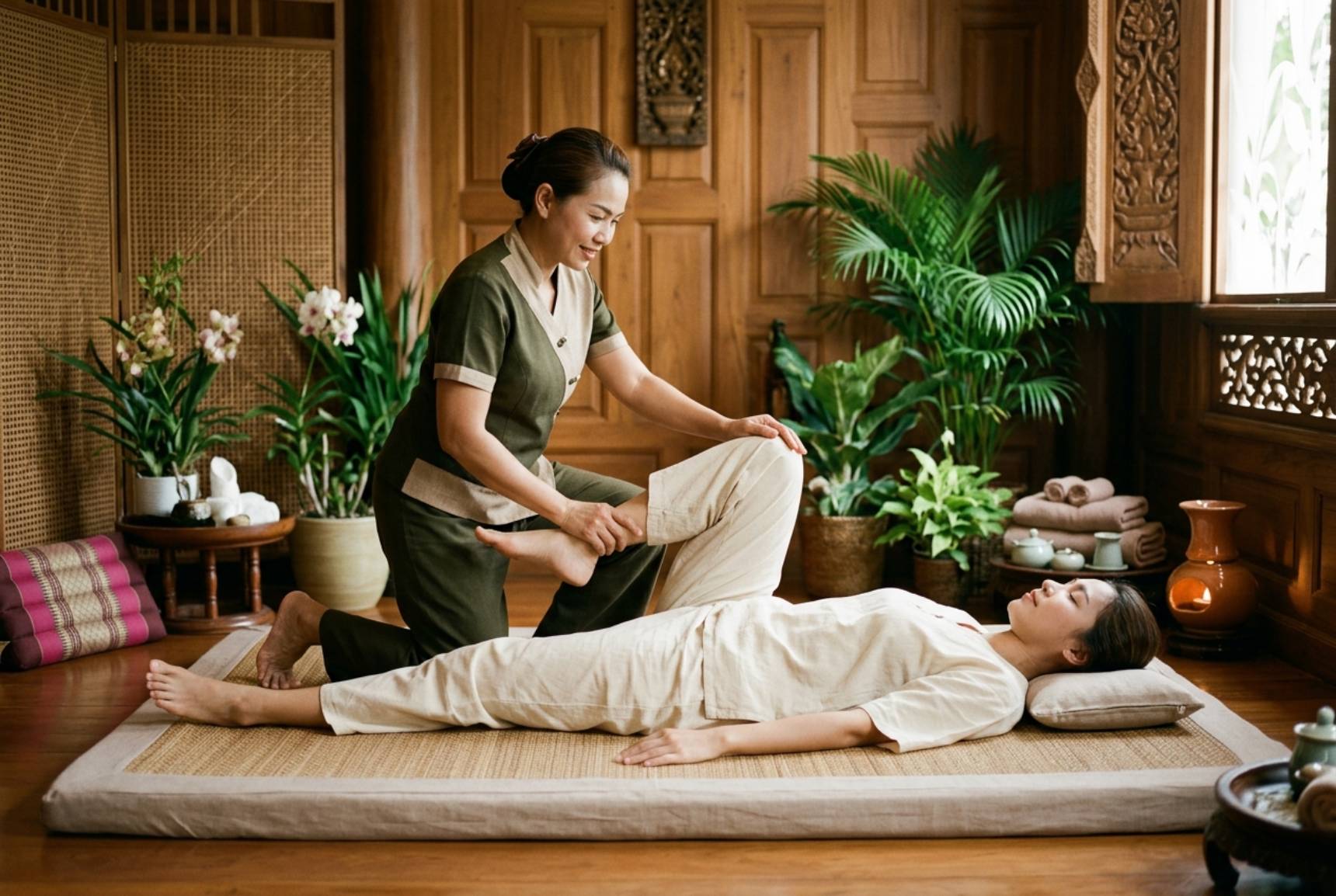
There is a distinctive rhythm to traditional Thai massage. It is neither hurried nor forceful. Instead, it moves with a quiet sense of purpose, combining steady pressure, assisted stretching, flowing movements, and mindful pauses to create an experience that feels both grounding and restorative.
For centuries, Thai massage has been part of Thailand’s wellness culture, shaped by traditional healing practices and a holistic understanding of the relationship between body and mind. Today, it remains one of the most distinctive massage traditions in Bangkok, offering visitors and residents an opportunity to slow down, reconnect with the body, and experience relaxation through movement rather than stillness alone.
At a time when modern life often encourages us to move quickly from one task to another, the gentle rhythm of Thai massage offers something different: time to breathe, release tension, and allow the body to move naturally.
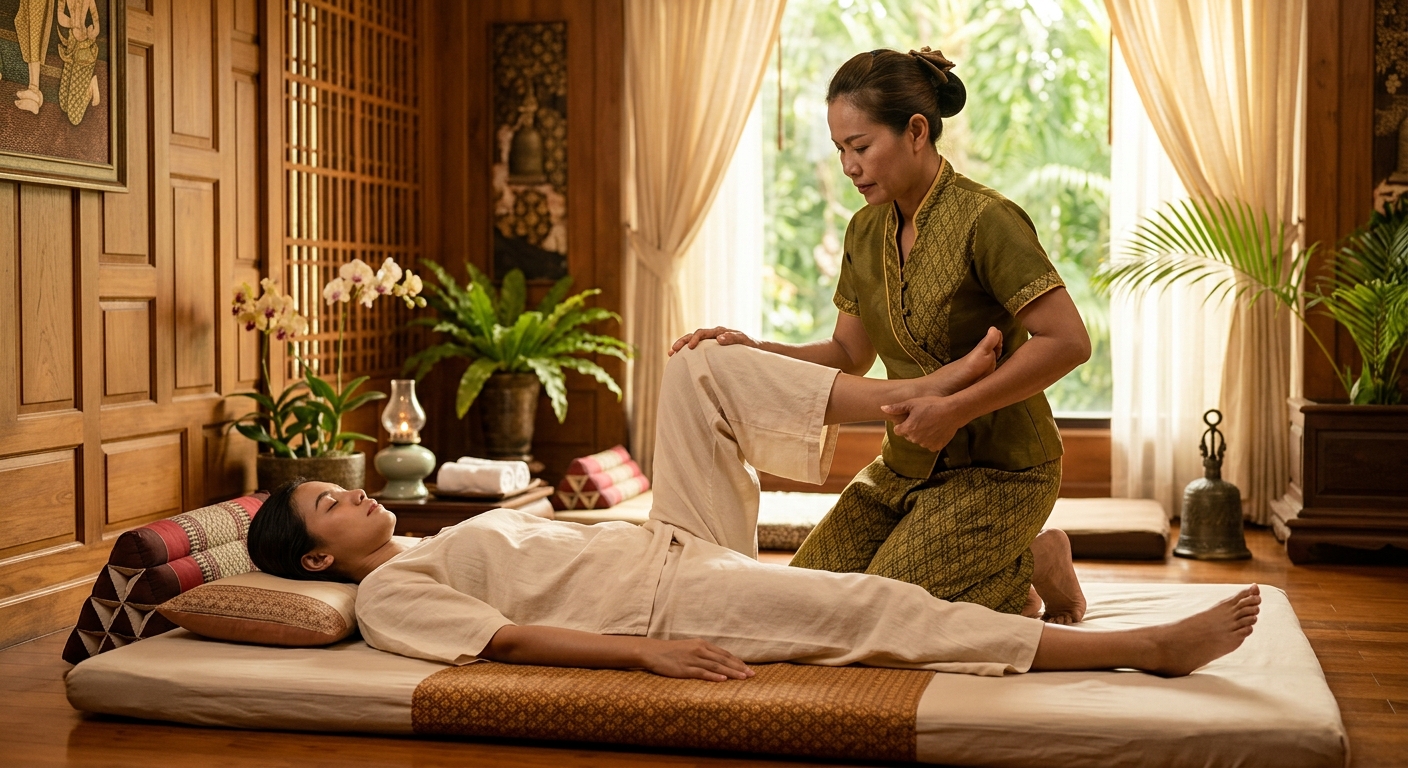 One of the defining characteristics of Thai massage is rhythm. The practitioner uses controlled, repeated movements that can feel almost meditative.
Pressure may be applied gradually, held for a moment, and then released before moving to another area. Gentle rocking or rhythmic compressions may be incorporated to encourage the body to relax. Assisted stretches can then introduce greater movement, depending on the guest’s comfort and flexibility.
This rhythm allows the experience to develop naturally. There is no need to rush from one technique to another. The pauses between movements can be just as important as the movements themselves, giving the body time to respond.
For many people, this creates a deeply calming experience. The combination of predictable rhythm, focused breathing, and slow movement can help shift attention away from everyday distractions and toward physical awareness.
One of the defining characteristics of Thai massage is rhythm. The practitioner uses controlled, repeated movements that can feel almost meditative.
Pressure may be applied gradually, held for a moment, and then released before moving to another area. Gentle rocking or rhythmic compressions may be incorporated to encourage the body to relax. Assisted stretches can then introduce greater movement, depending on the guest’s comfort and flexibility.
This rhythm allows the experience to develop naturally. There is no need to rush from one technique to another. The pauses between movements can be just as important as the movements themselves, giving the body time to respond.
For many people, this creates a deeply calming experience. The combination of predictable rhythm, focused breathing, and slow movement can help shift attention away from everyday distractions and toward physical awareness.
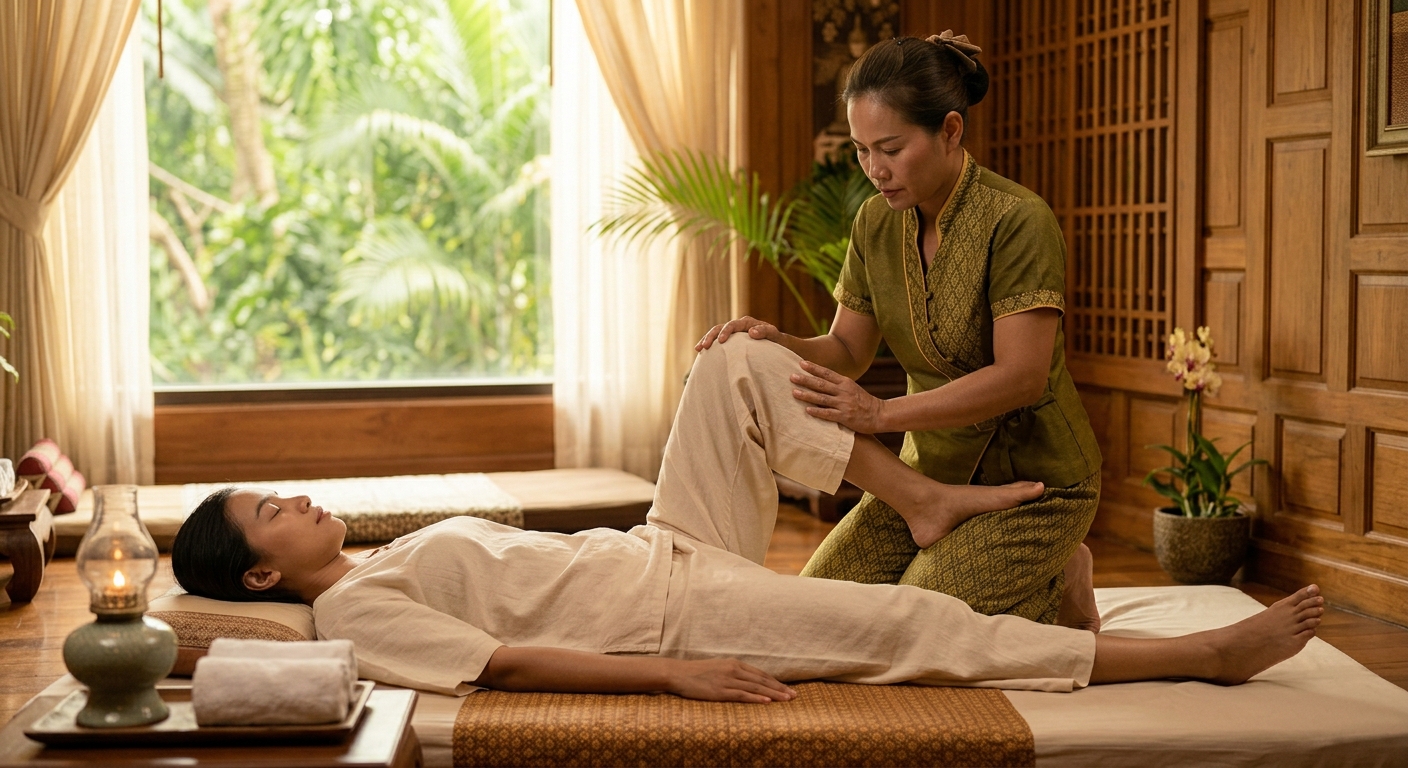 One of the most beautiful aspects of Thai massage is its ability to encourage presence.
The slow rhythm naturally invites the guest to notice sensations that might normally go unnoticed: the rise and fall of the breath, the weight of the body, the movement of a joint, or the gradual release of tension.
Rather than actively trying to relax, the guest can simply follow the rhythm of the session.
Breathing becomes part of the experience. Movement becomes slower. The outside world begins to feel more distant.
This mindful quality can make Thai massage feel like more than a physical treatment. It becomes a temporary pause from the constant stimulation of modern life.
One of the most beautiful aspects of Thai massage is its ability to encourage presence.
The slow rhythm naturally invites the guest to notice sensations that might normally go unnoticed: the rise and fall of the breath, the weight of the body, the movement of a joint, or the gradual release of tension.
Rather than actively trying to relax, the guest can simply follow the rhythm of the session.
Breathing becomes part of the experience. Movement becomes slower. The outside world begins to feel more distant.
This mindful quality can make Thai massage feel like more than a physical treatment. It becomes a temporary pause from the constant stimulation of modern life.
Understanding the Flow of Thai Massage
Thai massage is often described as a combination of massage, stretching, acupressure, and assisted movement. However, these individual techniques only tell part of the story. What makes the experience unique is the way they are connected. A traditional session follows a natural progression through the body. The practitioner may begin with slower movements before gradually introducing deeper pressure or assisted stretches. Rather than treating every area independently, the practitioner works through a continuous sequence, creating a sense of movement and balance from one technique to the next. This flowing approach is one of the reasons Thai massage can feel different from conventional massage styles. Instead of simply lying still while pressure is applied, the guest becomes part of a carefully guided movement experience.More Than Pressure: The Art of Rhythm
One of the defining characteristics of Thai massage is rhythm. The practitioner uses controlled, repeated movements that can feel almost meditative.
Pressure may be applied gradually, held for a moment, and then released before moving to another area. Gentle rocking or rhythmic compressions may be incorporated to encourage the body to relax. Assisted stretches can then introduce greater movement, depending on the guest’s comfort and flexibility.
This rhythm allows the experience to develop naturally. There is no need to rush from one technique to another. The pauses between movements can be just as important as the movements themselves, giving the body time to respond.
For many people, this creates a deeply calming experience. The combination of predictable rhythm, focused breathing, and slow movement can help shift attention away from everyday distractions and toward physical awareness.
The Philosophy Behind Traditional Thai Massage
Thai massage has deep roots in Thailand’s traditional wellness culture. It has historically been associated with Buddhist traditions, traditional medicine, and holistic approaches to wellbeing. Traditional Thai massage is often connected with the concept of Sen, commonly described as energy pathways within the body. Practitioners work along these pathways using pressure, movement, and stretching as part of the traditional practice. While modern scientific perspectives may describe the experience in terms of muscular relaxation, mobility, circulation, nervous-system responses, and body awareness, the traditional philosophy provides an important cultural context for understanding Thai massage. It is this combination of physical practice and traditional philosophy that has helped Thai massage become such an important part of Thailand’s wellness identity.Stretching That Feels Like Movement
Assisted stretching is one of the features that most clearly distinguishes Thai massage from many other massage traditions. During a session, the practitioner may guide the arms, legs, hips, shoulders, or spine through comfortable ranges of movement. These stretches are performed with the guest remaining relaxed while the practitioner provides support and controlled movement. The sensation can be very different from actively stretching alone. Because the practitioner guides the movement, the guest can concentrate on breathing and relaxation rather than controlling every motion. When performed appropriately and within a comfortable range, these movements can help create a feeling of openness and ease throughout the body. The goal is not to force flexibility but to encourage comfortable movement and relaxation.Why the Pace Matters
In Thai massage, the pace is part of the treatment itself. A rushed sequence can change the entire experience. By maintaining a slow and consistent rhythm, the practitioner creates space for the guest to settle into the session. Breathing can become slower, muscles may begin to soften, and attention can gradually move away from the demands of the day. This is particularly relevant in Bangkok, where modern city life can be energetic and fast-moving. Between traffic, work, travel, shopping, meetings, and sightseeing, finding a moment of genuine stillness can be surprisingly difficult. Thai massage offers an opportunity to step away from that pace. For an hour or more, there is nowhere else to go and nothing else to accomplish. The focus becomes the present moment and the physical experience of movement and relaxation.A Whole-Body Experience
Thai massage is traditionally approached as a whole-body practice rather than a treatment focused exclusively on one muscle or area. The session may include the feet and lower legs, thighs, hips, back, shoulders, arms, hands, neck, and head. Techniques are adapted according to the individual’s needs, comfort, and experience. This whole-body approach can create a sense of connection between different areas of the body. Tightness in one region can sometimes influence how another part of the body feels or moves. By working through a broader sequence, Thai massage provides an opportunity to address the body as an interconnected system.The Feet: Where the Journey Begins
The feet often play an important role in a traditional Thai massage sequence. They carry the body throughout the day and can accumulate tension from standing, walking, commuting, exercising, or travelling. Slow pressure and massage techniques around the feet can provide a grounding beginning to the session. From there, the practitioner may gradually work upward through the lower legs and thighs, following the natural progression of the treatment. For travellers arriving in Bangkok after a long flight or a full day of exploring the city, this focus on the lower body can be particularly welcome.Finding Balance Between Firmness and Gentleness
Thai massage is sometimes associated with strong pressure and intensive stretching. While deeper techniques can be part of certain Thai massage styles, an effective session does not necessarily need to be forceful. The most important element is balance. A skilled practitioner adjusts pressure and movement according to the guest’s body, comfort level, flexibility, and preferences. Some areas may respond well to firmer pressure, while others may benefit from slower and gentler techniques. This ability to adapt is what transforms a sequence of techniques into a personalized experience. Thai massage is not simply about how much pressure is used. It is about how pressure, movement, rhythm, and relaxation work together.Thai Massage and Modern Urban Wellness
Although Thai massage has ancient roots, its principles remain highly relevant to modern lifestyles. Long hours at a desk can leave the shoulders and neck feeling tight. Frequent smartphone use can encourage poor posture. Travel can create stiffness from prolonged sitting. Exercise can leave muscles feeling tired or restricted. Thai massage offers a different approach to these everyday challenges by combining massage with movement. Instead of focusing only on relaxing individual muscles, the experience incorporates assisted stretching and mobility into a continuous sequence. For people who spend much of their day sitting, travelling, exercising, or working under pressure, this movement-based approach can be a refreshing addition to a personal wellness routine.The Mindful Side of Thai Massage
One of the most beautiful aspects of Thai massage is its ability to encourage presence.
The slow rhythm naturally invites the guest to notice sensations that might normally go unnoticed: the rise and fall of the breath, the weight of the body, the movement of a joint, or the gradual release of tension.
Rather than actively trying to relax, the guest can simply follow the rhythm of the session.
Breathing becomes part of the experience. Movement becomes slower. The outside world begins to feel more distant.
This mindful quality can make Thai massage feel like more than a physical treatment. It becomes a temporary pause from the constant stimulation of modern life.