
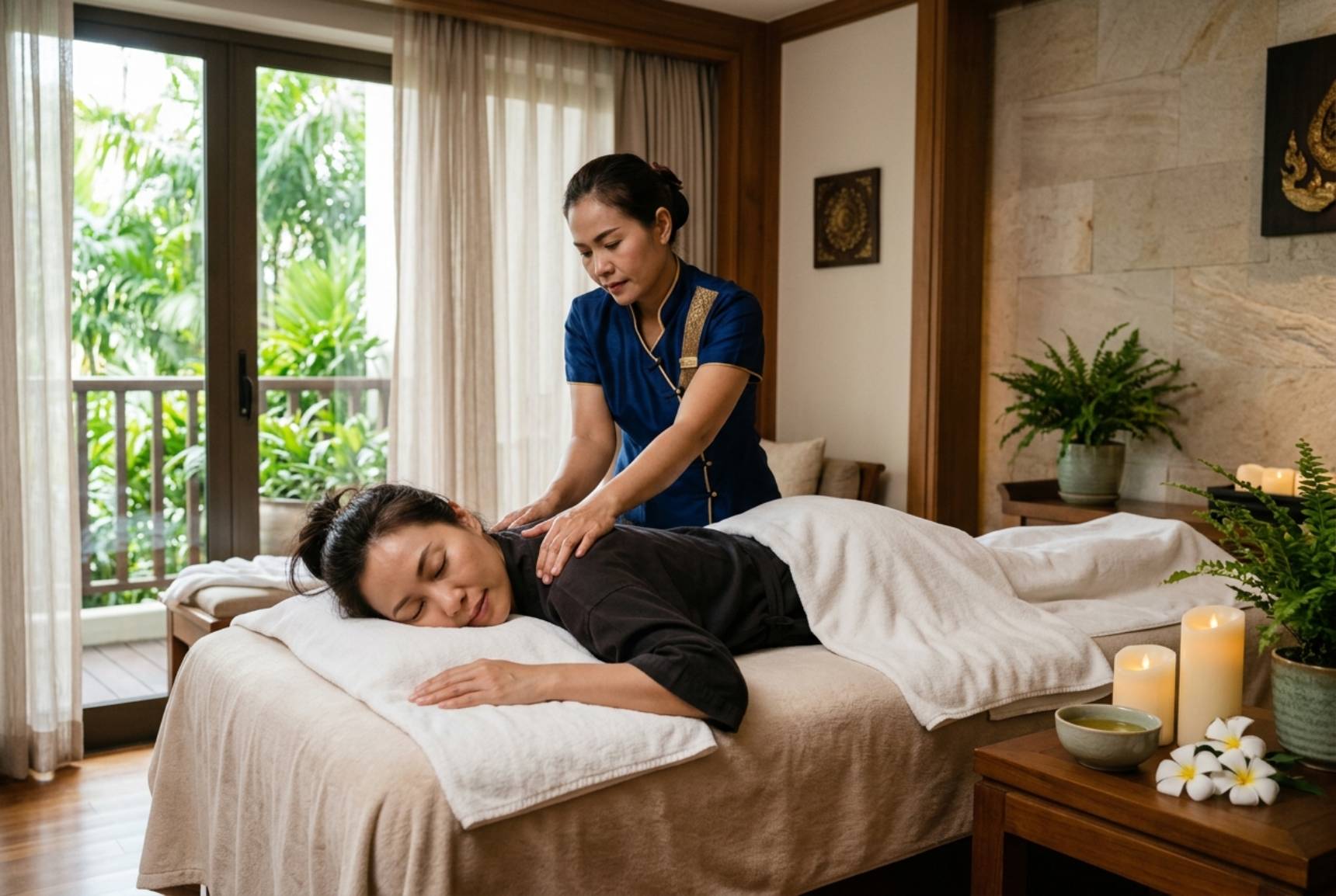
Modern life can make it difficult to slow down. Between work, smartphones, busy schedules, notifications, and everyday responsibilities, our attention is often somewhere other than the present moment. Mindfulness offers a way to reconnect with the here and now by paying attention to our thoughts, breathing, and physical sensations without judgment.
But can a massage help you become more mindful?
While massage is not a replacement for meditation or other mindfulness practices, the experience of receiving a massage can create a natural opportunity to slow down and become more aware of the body. The quiet environment, rhythmic movements, focused breathing, and physical sensations of a massage may encourage you to pause, relax, and pay attention to what you are experiencing in the moment.
What Is Mindfulness?
Mindfulness is the practice of bringing your attention to the present moment rather than becoming caught up in past events or future worries. It can involve noticing your breathing, physical sensations, thoughts, and emotions with a sense of openness and awareness.
Mindfulness does not necessarily mean emptying your mind. Instead, it is about noticing what is happening without immediately reacting to it. For example, you might notice the sensation of your breathing, the feeling of your feet touching the floor, or tension in your shoulders.
Mindfulness and meditation are commonly used as wellness practices that encourage greater awareness of the present moment and may support relaxation and emotional well-being.
How Can Massage Encourage Mindfulness?
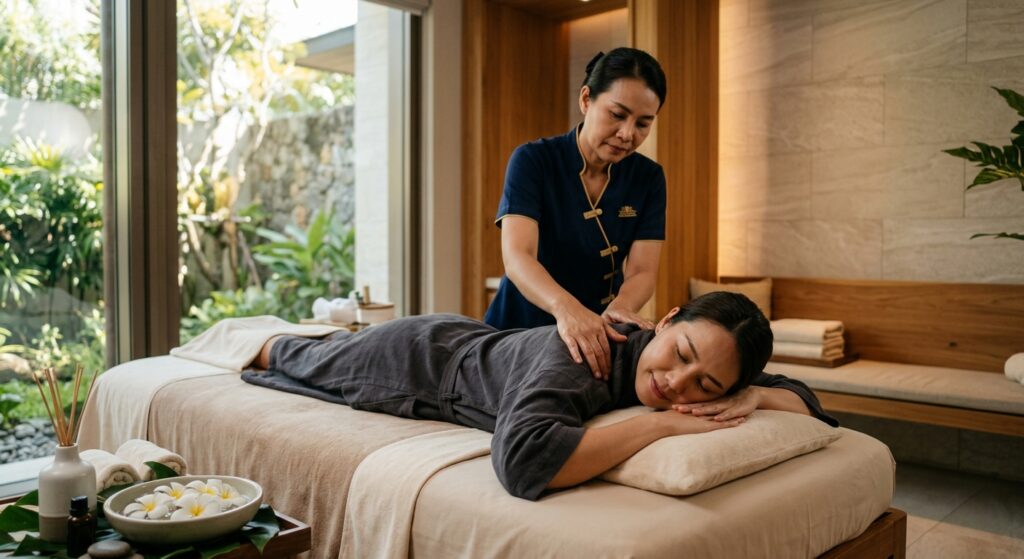
A massage naturally directs attention toward the body. Instead of focusing on emails, conversations, deadlines, or other distractions, you may become more aware of pressure, warmth, movement, breathing, and areas of tension.
This shift in attention can create an experience that feels similar to one aspect of mindfulness: intentionally noticing what is happening in the present moment.
Massage Brings Your Attention Back to the Body
Many people spend much of the day thinking rather than noticing how their body feels. During a massage, physical sensations become much more noticeable.
You may become aware of tightness around your shoulders, heaviness in your legs, tension in your back, or the sensation of muscles gradually relaxing. Rather than trying to analyse these sensations, you can simply notice them.
This simple practice of observing physical sensations can help you develop greater body awareness.
A Massage Creates Space to Slow Down
Mindfulness requires attention, but attention can be difficult when you are constantly moving from one task to another. A massage provides dedicated time away from many everyday distractions.
In a calm spa environment, there may be fewer demands competing for your attention. Instead of checking your phone or thinking about your next appointment, you can give yourself permission to pause.
That pause can be valuable in itself.
Breathing Can Become More Noticeable
When people are busy or stressed, their breathing may become something they barely notice. During a relaxing massage, you may naturally become more aware of the rhythm and depth of your breathing.
Try gently noticing your breath during your next massage. There is no need to force it or control every breath. Simply observe the movement of your chest or abdomen and the sensation of inhaling and exhaling.
This simple awareness can help you remain connected to the present moment.
Repetitive Massage Movements Can Support a Calmer State
Many massage techniques involve rhythmic, repeated movements. Paying attention to these sensations can give your mind a simple point of focus.
Instead of allowing your thoughts to jump continuously from one subject to another, you can gently return your attention to the movement of the therapist’s hands, the pressure being applied, or the feeling of your muscles becoming more relaxed.
You do not need to concentrate perfectly. If your thoughts wander, simply notice that they have wandered and bring your attention back to the physical experience.
Massage Can Help You Notice Where You Hold Tension
Physical tension can sometimes become so familiar that we stop noticing it. A massage may make these areas more apparent.
For example, you might realise that your shoulders are constantly raised, that you clench your jaw, or that your lower back feels tighter than you expected. Becoming aware of these sensations can be the first step toward paying more attention to how your body responds to daily stress.
Massage is widely used as a complementary wellness practice for relaxation and may provide short-term benefits for certain types of pain and tension, although individual experiences can vary.
Massage and Mindfulness: What Is the Connection?
The connection between massage and mindfulness is not that massage automatically makes someone mindful. Instead, massage can provide an environment in which mindful awareness becomes easier to practise.
Both experiences can encourage you to shift attention away from constant mental activity and toward the present moment. Meditation may use the breath, a sound, or another point of focus, while massage naturally provides physical sensations that can become the focus of your attention.
In this sense, a massage can become an opportunity to practise being present.
How to Practise Mindfulness During a Massage
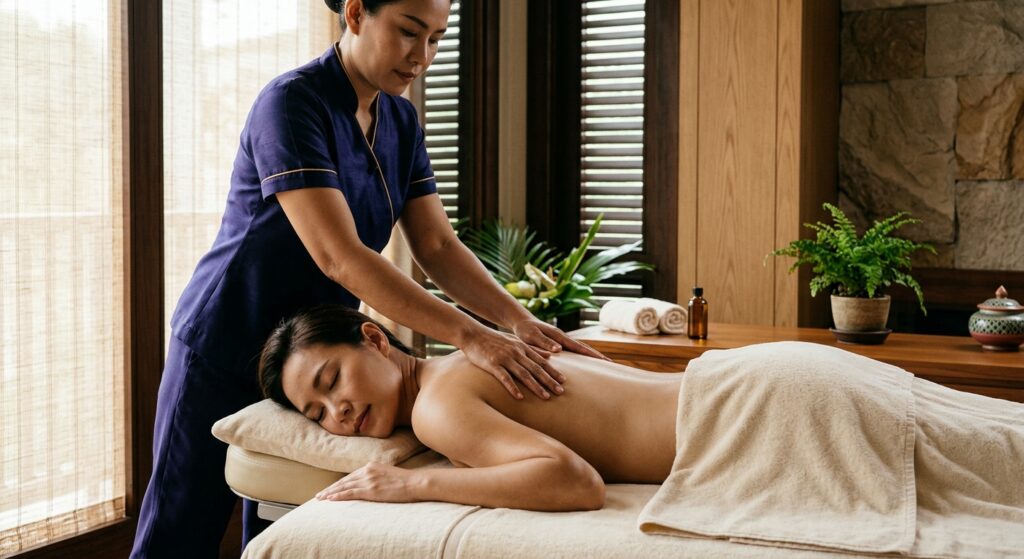
You do not need to turn your massage into a formal meditation session. A few simple habits can help you stay connected to the experience.
Focus on Your Breathing
Begin by noticing your natural breathing pattern. Feel the air moving in and out without trying to change it.
Notice Physical Sensations
Pay attention to pressure, warmth, movement, and areas of tension or relaxation. Try to observe these sensations without judging them as good or bad.
Let Thoughts Come and Go
Your mind may wander to work, family, travel, or tomorrow’s schedule. That is completely normal. Instead of becoming frustrated, acknowledge the thought and gently return your attention to your breathing or the massage.
Reduce Digital Distractions
If possible, put your phone away before your treatment begins. Constant notifications can make it harder to remain present, while a short period without digital interruptions can help you fully experience your time at the spa.
Pay Attention to the Transition After Your Massage
Mindfulness does not have to end when the massage ends. Before immediately returning to your phone or rushing to your next appointment, take a few moments to notice how your body feels.
Ask yourself: Do my shoulders feel different? Is my breathing slower? Do I feel more aware of my body?
Simply observing these changes can turn the end of your treatment into another mindful moment.
Which Types of Massage May Suit a Mindful Experience?
Different massage styles create different experiences, so the best choice depends on your personal preferences, comfort level, and treatment goals.
Thai Massage
Traditional Thai massage combines assisted stretching, pressure, and rhythmic techniques. The movement and changing physical sensations can encourage you to remain aware of your body throughout the treatment.
Oil Massage
A relaxing oil massage may provide a slower, smoother experience. The warmth of the oil, flowing movements, and calm environment can make it easier to focus on breathing and physical sensations.
Aromatherapy Massage
Aromatherapy massage combines massage techniques with aromatic oils. The sensory experience of scent, touch, and relaxation can provide additional points of awareness during the treatment.
Foot Massage
A foot massage offers a simple way to focus attention on an area that is often overlooked. Noticing pressure, warmth, movement, and changes in sensation can help bring awareness back to the present moment.
Can Massage Reduce Stress?
Massage is often used as a wellness practice to promote relaxation, and many people find it helpful as part of their self-care routine. However, massage should not be considered a treatment for an anxiety disorder or other mental health condition.
For everyday wellness, creating time to slow down and reconnect with your body can be a meaningful part of a balanced self-care routine.
Massage Is Not a Replacement for Mindfulness Practice
It is important to distinguish between a relaxing massage and formal mindfulness practice.
Massage can create an environment that supports present-moment awareness, but mindfulness is a skill that can also be developed through meditation, mindful breathing, walking, yoga, and everyday activities.
The goal is not to make every massage session a meditation. Instead, you can use the experience as a gentle reminder to slow down and notice what is happening in your body and mind.
How to Make Your Next Spa Visit More Mindful
If you want to explore the connection between massage and mindfulness, approach your next treatment with a simple intention: be present.
Arrive a little earlier if possible. Give yourself time to settle into the environment rather than rushing directly into the treatment. During the massage, notice your breathing and physical sensations. Allow thoughts to come and go without trying to solve every problem in your head.
Most importantly, give yourself permission to enjoy the experience without feeling that you need to achieve anything.
A Moment to Reconnect at a Bangkok Spa
In a busy city like Bangkok, finding time to pause can be difficult. Between work, commuting, shopping, social commitments, and everyday responsibilities, moments of quiet can easily disappear from the schedule.
A massage can offer a dedicated period to step away from that pace. Whether you choose traditional Thai massage, an oil massage, aromatherapy, or another relaxing treatment, the experience can be an opportunity to reconnect with your body and practise being more present.
At Bangkok Spa, a spa experience can be more than simply taking time away from a busy day. It can be a chance to slow down, notice how you feel, and give your attention to the present moment.
So, can a massage help you be more mindful?
It can create the perfect setting to practise mindfulness—but the real practice begins with how you choose to experience the moment.
Final Thoughts
Mindfulness does not always require sitting quietly with your eyes closed. Sometimes, it can begin with something as simple as noticing your breath, feeling your shoulders relax, or paying attention to the sensation of a therapist’s hands during a massage.
Massage and mindfulness are not the same practice, but they can complement one another. By slowing down and paying attention to your body, a massage can become more than a physical treatment—it can become a mindful pause in the middle of a busy life.