

Thai massage is more than a relaxing treatment. Known in Thailand as Nuad Thai, it is a traditional healing practice built around movement, pressure, stretching, rhythm, and a holistic understanding of the body.
Unlike many modern massage styles that focus primarily on soft-tissue manipulation, Thai massage traditionally combines pressure techniques with assisted stretching and rhythmic bodywork. The result is an experience that can feel both grounding and energizing—a distinctive part of Thailand’s wellness culture.
In 2019, Nuad Thai was inscribed on UNESCO’s Representative List of the Intangible Cultural Heritage of Humanity, recognizing its importance within Thai traditional healthcare and cultural heritage.
Thai Massage Is Rooted in a Holistic Philosophy
One of the most important differences between traditional Thai massage and many Western massage techniques is the way the body is viewed.
Thai massage traditionally considers physical comfort, movement, balance, and energy as interconnected. Within Thai traditional healthcare, practitioners work with the concept of sen, described as pathways through which energy is believed to flow throughout the body. The purpose of working along these pathways is traditionally understood as helping restore balance and encourage healthy flow.
This philosophy means that a Thai massage session is not simply about finding one sore muscle and working directly on it. Instead, the practitioner may work progressively through different areas of the body, combining pressure, compression, stretching, and movement.
The experience is therefore often described as a combination of massage and assisted movement.
What Are Sen Lines?
The concept of sen lines is central to traditional Thai massage.
In Thai traditional medicine, sen are understood as energy pathways that run throughout the body. Practitioners use pressure and other manual techniques along these pathways as part of the traditional approach to restoring balance.
It is important to understand sen as part of a traditional healing philosophy, rather than equating them directly with nerves, blood vessels, or other structures recognized by modern anatomy.
For someone receiving Thai massage, this philosophy translates into a treatment that pays attention to the body as a connected system rather than treating individual muscles in isolation.
Why Stretching Is Such an Important Part of Thai Massage
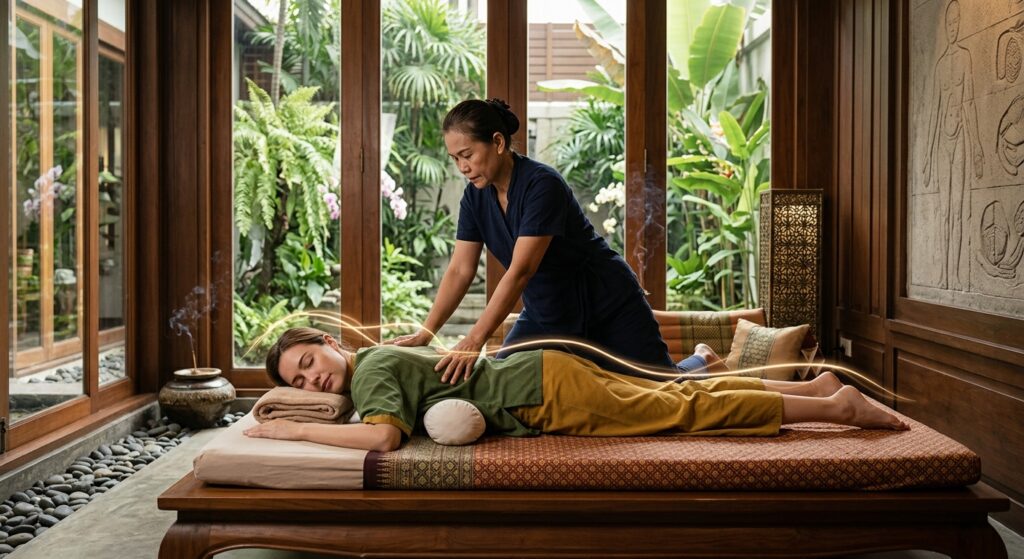
One of the most recognizable features of Thai massage is assisted stretching.
During a traditional session, the practitioner may guide the body through carefully controlled movements while applying pressure to selected areas. These movements can resemble gentle yoga positions, which is why Thai massage is sometimes informally described as “assisted yoga.”
The recipient remains relaxed while the practitioner provides the movement.
This creates a very different sensation from a conventional oil massage. Instead of simply lying still while long strokes are applied to the muscles, the body becomes an active part of the treatment.
Depending on the style and intensity of the session, techniques can include:
- Gentle stretching
- Rhythmic compression
- Acupressure-style pressure
- Joint movement
- Assisted positioning
- Palm pressure
- Thumb pressure
- Controlled use of elbows, knees, hands, or feet
Traditional Thai massage can therefore feel dynamic while still being deeply relaxing.
Pressure, Rhythm, and Breath
Another defining characteristic is rhythm.
Thai massage traditionally uses a sequence of controlled movements rather than a collection of isolated techniques. The practitioner may gradually move from one area of the body to another, alternating between pressure and stretching.
This rhythmic quality can encourage the recipient to slow down and become more aware of their breathing and physical sensations.
For many guests, this is one of the reasons Thai massage feels different from a typical spa massage. The treatment has a sense of movement and continuity rather than simply focusing on relaxation through touch.
Why Thai Massage Does Not Usually Require Oil
Traditional Thai massage is generally performed without massage oil.
Instead, the guest typically wears comfortable, loose clothing that allows the practitioner to stretch and move the body easily.
This makes Thai massage particularly distinctive compared with aromatherapy, Swedish, or other oil-based massage treatments.
The absence of oil also allows the practitioner to use firmer compression and assisted stretching without creating excessive slipperiness.
Modern spas may adapt traditional Thai massage by incorporating oils, aromatherapy, herbal compresses, or other wellness elements, but the classic approach is based primarily on direct pressure, movement, and stretching.
The Hands Are Not the Only Tools
Thai massage is also distinctive because practitioners may use different parts of the body to create pressure.
Depending on the technique and style, traditional Thai massage can involve the:
- Hands and palms
- Thumbs
- Elbows
- Knees
- Feet
UNESCO specifically notes the use of hands, elbows, knees, and feet in Nuad Thai techniques.
This allows practitioners to create different types of pressure while maintaining a continuous rhythm throughout the treatment.
Rather than relying only on finger strength, experienced practitioners can use their body weight and positioning to deliver controlled pressure.
The Influence of Thai Traditional Medicine
Thai massage developed as part of a broader tradition of Thai healthcare rather than as an isolated spa treatment.
Its history includes generations of practical knowledge passed through communities, eventually developing into a more formal system of knowledge and training. UNESCO describes Nuad Thai as part of the art, science, and culture of traditional Thai healthcare.
Wat Pho in Bangkok has also played an important role in preserving and teaching traditional Thai massage. Historical diagrams and therapeutic knowledge associated with Wat Pho helped document traditional approaches to massage and the sen system.
For visitors experiencing Thai massage in Bangkok, this cultural background adds another dimension to the treatment. What may initially appear to be a simple wellness experience is connected to a much longer tradition of Thai healing knowledge.
Thai Massage as an Expression of Care
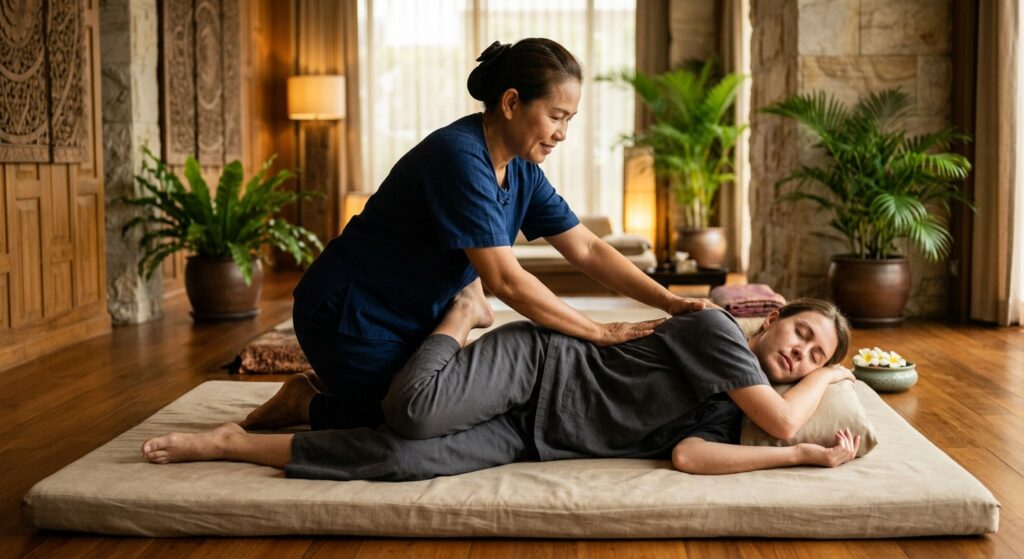
There is also an important human element behind Thai massage.
UNESCO’s recognition of Nuad Thai emphasizes that the practice has traditionally been an expression of care, kindness, and community knowledge. Massage was historically practiced within communities to help people experiencing physical discomfort after daily work and activity.
This idea of caring for another person’s physical wellbeing remains an important part of the philosophy.
A Thai massage session is therefore not simply about technique. It is also about attentive touch, patience, respect, and creating a sense of balance.
What Can You Expect During a Thai Massage in Bangkok?
For a first-time guest, Thai massage can feel different from what they expect.
A typical traditional-style session may begin with the guest changing into comfortable clothing. The practitioner then works progressively through the body, using pressure and stretching techniques.
The treatment may include work on the:
- Feet and lower legs
- Calves and thighs
- Hips
- Back
- Shoulders
- Arms
- Hands
- Neck
- Head
The exact sequence depends on the practitioner’s training, the style of Thai massage, and the guest’s needs.
A quality treatment should never feel like a competition to tolerate pain. Communication is important. Guests should let the practitioner know if pressure or stretching feels uncomfortable so the treatment can be adjusted.
Thai Massage and Modern Spa Experiences
Today, Thai massage can be experienced in many different settings—from traditional massage schools and local wellness centers to sophisticated luxury spas in Bangkok.
Modern spas may combine traditional Thai techniques with contemporary hospitality and personalized wellness experiences.
For example, a luxury Thai spa may offer a traditional Thai massage alongside aromatherapy, herbal treatments, facial therapies, hot compresses, or other specialized treatments.
The setting may be modern, but the fundamental elements of Thai massage—pressure, movement, stretching, rhythm, and mindful touch—can remain at the heart of the experience.
Why Thai Massage Remains Popular
Thai massage has remained popular because it offers something different from a purely passive massage experience.
Rather than simply receiving strokes, the guest experiences a combination of:
Pressure + Stretching + Movement + Rhythm + Relaxation
This combination can leave the body feeling deeply worked while also creating a profound sense of relaxation.
For travelers visiting Bangkok, it also provides an opportunity to experience an important part of Thai wellness culture rather than simply booking another conventional massage.
Experience the Philosophy of Thai Massage in Bangkok
Thai massage is unique because its purpose extends beyond temporary relaxation. It represents a traditional approach to caring for the body through touch, movement, pressure, and balance.
From the concept of sen lines to assisted stretching and rhythmic compression, every element reflects a philosophy in which the body is treated as an interconnected whole.
That combination of ancient knowledge, skilled touch, movement, and mindful care is what continues to make Thai massage one of Thailand’s most distinctive wellness traditions.
For visitors looking for an authentic Bangkok spa experience, experiencing Thai massage is not simply about receiving a treatment. It is a way to connect with a living tradition that has been passed down through generations and remains an important part of Thailand’s cultural heritage.
Suggested CTA
Discover Traditional Thai Massage in Bangkok
Step away from the pace of the city and experience the distinctive philosophy of Thai massage in a refined spa environment. Allow skilled therapists to combine traditional pressure techniques, stretching, and rhythmic movement to create a deeply restorative wellness experience.