
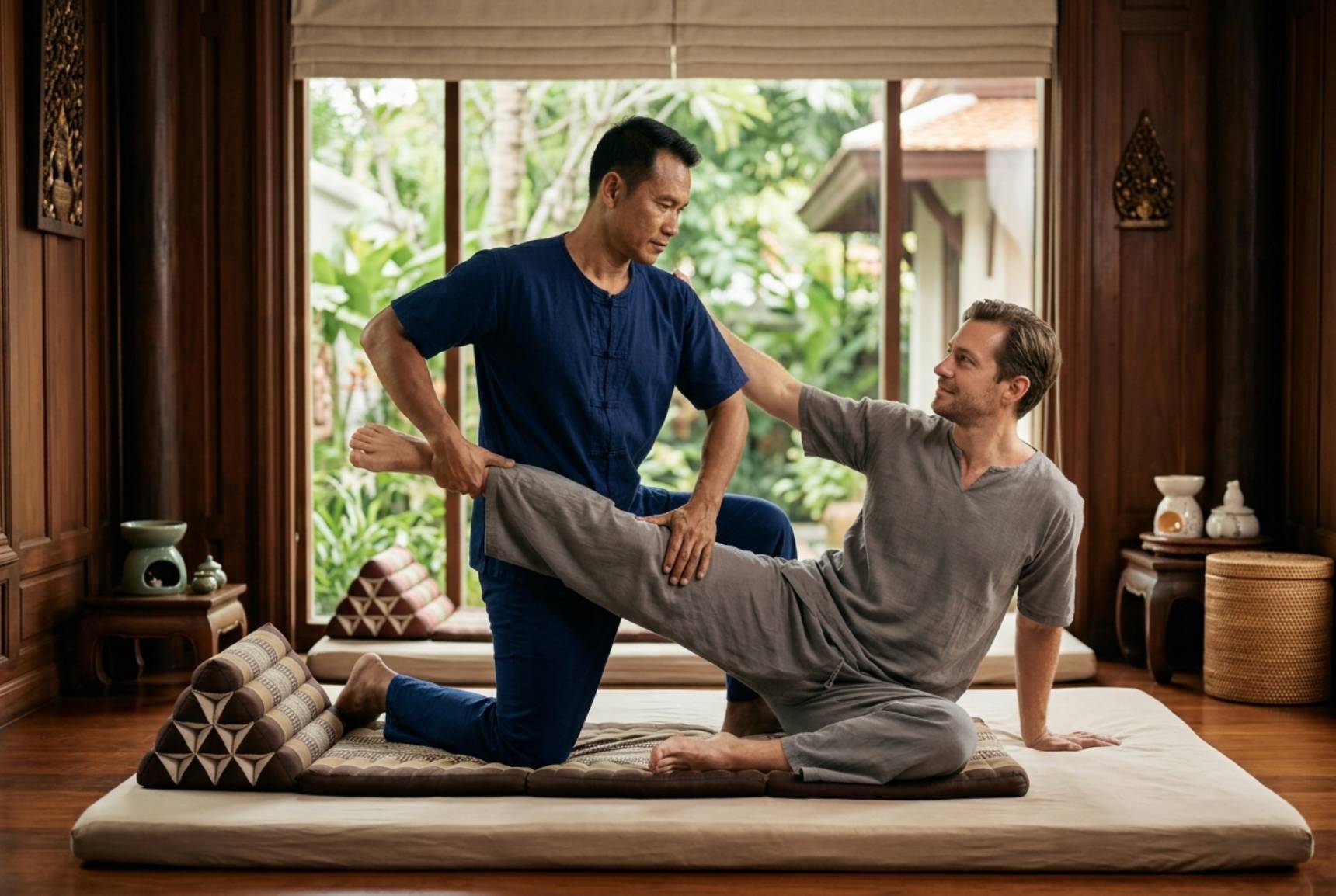
In Thailand, massage is more than a method of relaxation. It is part of a long-standing tradition of bodywork in which pressure, movement, stretching, rhythm, and posture work together to create a deeply physical experience.
Among the many contemporary interpretations of Thai bodywork, Thai Warrior Massage captures this dynamic character particularly well. Inspired by the strength, mobility, and grounded movements associated with Thai martial traditions, it combines powerful massage techniques with assisted stretching and controlled body positioning.
At its heart is a simple idea: strength is not only about force—it is also about balance, alignment, mobility, and control.
A Tradition Built Around Movement
Traditional Thai massage, or Nuad Thai, differs from many Western massage styles because the body is not simply massaged while remaining still. Instead, the practitioner may use pressure, compression, rocking, stretching, and assisted movements to guide the recipient through different positions.
This movement-based approach helps explain why Thai massage is sometimes described as a form of passive yoga. The recipient relaxes while the practitioner creates carefully controlled movements, allowing different areas of the body to lengthen and move without requiring active effort.
Thai massage has also been recognized as an important part of Thailand’s cultural heritage, with Nuad Thai inscribed on UNESCO’s Representative List of the Intangible Cultural Heritage of Humanity in 2019.
Thai Warrior Massage takes inspiration from this movement-centered philosophy while introducing a more energetic and athletic character.
Where Power Meets Precision
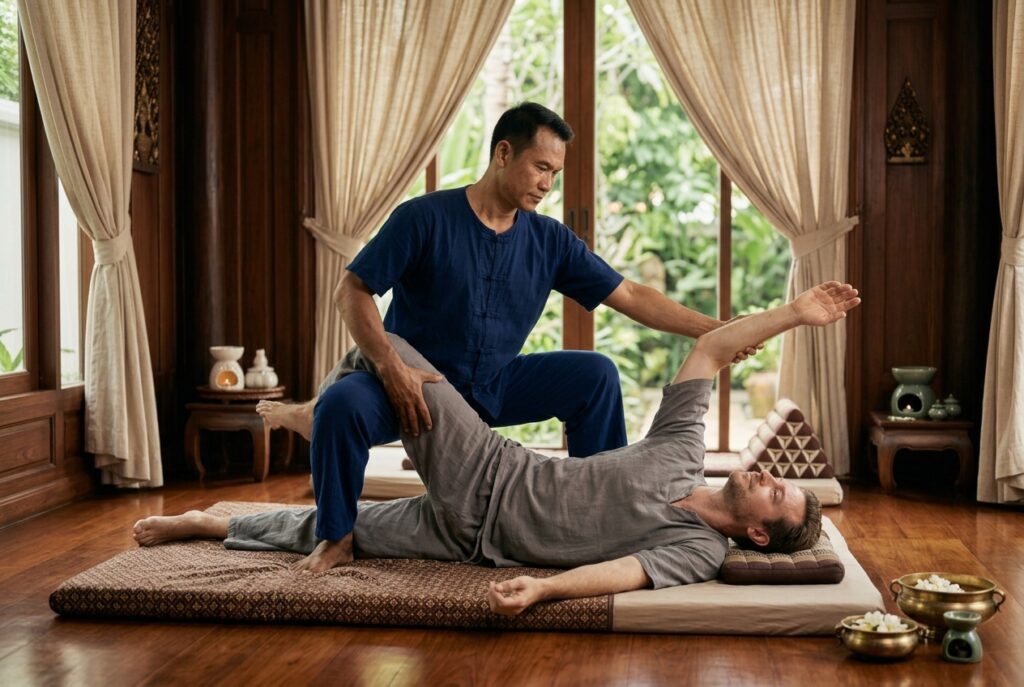
The word “warrior” can suggest intensity, but effective Thai bodywork is not simply about applying maximum pressure.
The real skill lies in how pressure is delivered.
A trained practitioner can use body weight, positioning, leverage, rhythm, and controlled movement rather than relying only on muscular force. Traditional Thai massage may involve the hands, thumbs, forearms, elbows, knees, and feet depending on the technique and style.
This creates a distinctive sensation: firm pressure can be followed by stretching, compression by movement, and intensity by moments of stillness.
Thai Warrior Massage therefore becomes a dialogue between power and precision.
The practitioner establishes the movement. The body responds.
The Importance of Posture
Posture is one of the defining elements of Thai bodywork.
Throughout a session, the body may be positioned in ways that encourage movement through the hips, legs, shoulders, spine, and other areas. Assisted stretching and traditional body positions form an important part of the wider Nuad Thai tradition. Historical representations of Thai massage and traditional stretching exercises can be found at Wat Pho in Bangkok.
For the modern guest, these techniques can create a feeling very different from a conventional oil massage.
Rather than simply lying still while muscles are worked, you become part of the movement.
The experience may feel dynamic, rhythmic, and surprisingly active—even while you remain relaxed.
The Warrior Spirit of Thai Bodywork
Thai Warrior Massage draws its character from qualities traditionally associated with physical discipline:
- Grounding — maintaining stability and awareness through the body
- Strength — applying purposeful, controlled pressure
- Flexibility — incorporating assisted stretching and movement
- Balance — coordinating different parts of the body
- Rhythm — creating a continuous flow between techniques
- Control — adapting intensity and movement to the individual
These principles make the treatment particularly interesting for people who spend long hours sitting, training, traveling, or engaging in physically demanding activities.
The objective is not simply to make a session feel powerful. It is to create a carefully structured experience in which pressure and movement complement one another.
From Traditional Thai Massage to a Modern Wellness Experience
The foundations of Thai massage are deeply connected to Thai traditional medicine. Historical development includes the preservation and teaching of massage knowledge at Wat Pho in Bangkok, where medical and massage information was documented and displayed during the Rattanakosin period.
Today, Thai massage continues to evolve within contemporary wellness while retaining many of its traditional characteristics.
Thai Warrior Massage can be understood in this context: a modern presentation of the more dynamic side of Thai bodywork.
Its appeal comes from the contrast between strength and serenity. A session can feel energetic without being rushed, powerful without being aggressive, and structured without losing the calming qualities associated with Thai massage.
Why Posture Matters Beyond the Massage Room
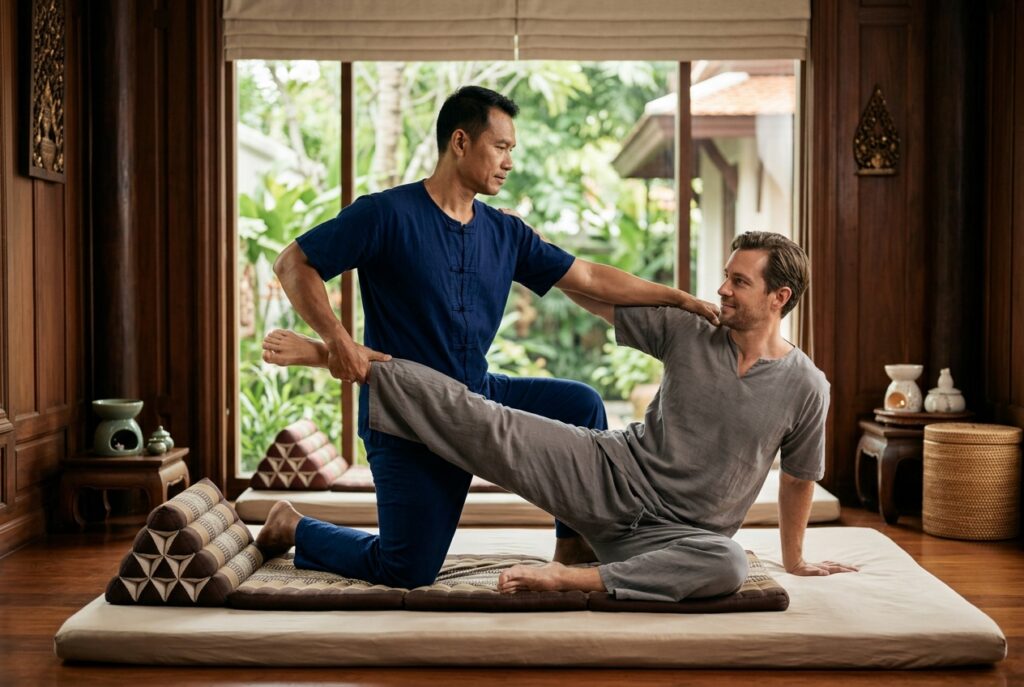
Modern lifestyles often keep the body in repetitive positions.
Hours at a desk can mean prolonged sitting. Smartphone use can encourage forward-head positioning. Travel can restrict movement for long periods. Exercise can repeatedly load the same muscle groups.
A bodywork session cannot replace medical care or correct every postural issue, but movement-focused massage can provide an opportunity to step away from repetitive patterns and experience a broader range of supported movement.
The combination of compression, stretching, and positioning is one reason traditional Thai massage is often experienced as both massage and movement practice.
A Different Kind of Strength
Perhaps the most interesting lesson behind Thai Warrior Massage is that strength does not always mean pushing harder.
In traditional movement disciplines, strength is closely connected to stability, breathing, balance, timing, and efficient movement.
The same principle can be felt during a Thai massage.
A practitioner does not need to overwhelm the body. Instead, the experience can build gradually—pressure, release, stretch, movement, stillness—creating a rhythm that allows the body to participate in the treatment.
That is where the idea of the warrior becomes more meaningful.
The warrior is not defined only by power.
The warrior is defined by control.
Experience Thai Warrior Massage in Bangkok
For visitors to Bangkok, Thai Warrior Massage offers an opportunity to experience Thai bodywork from a more dynamic perspective. It brings together the physicality of traditional Thai massage with an emphasis on movement, posture, controlled pressure, and flexibility.
It is an experience for those who want their massage to feel energizing as well as relaxing—a treatment where traditional Thai bodywork meets the spirit of movement and strength.
Power provides the intensity. Posture provides the control. Movement brings them together.